While studying gaming pieces and board game finds recovered from Olympos, one of the sources I came across and particularly enjoyed reading was Gaspar Pujol Nicolau's doctoral thesis, Traditional Cosmological Symbolism in Ancient Board Games.
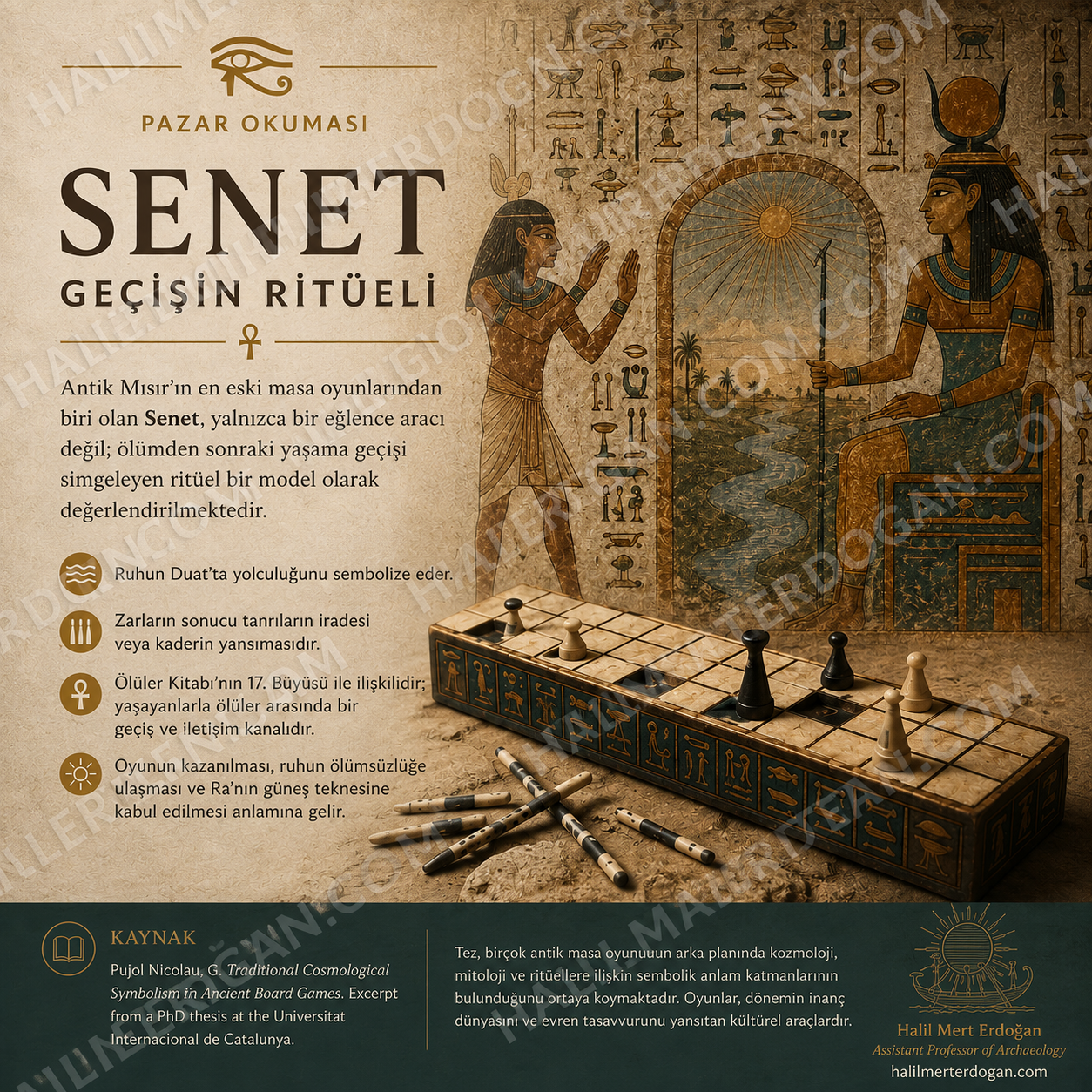
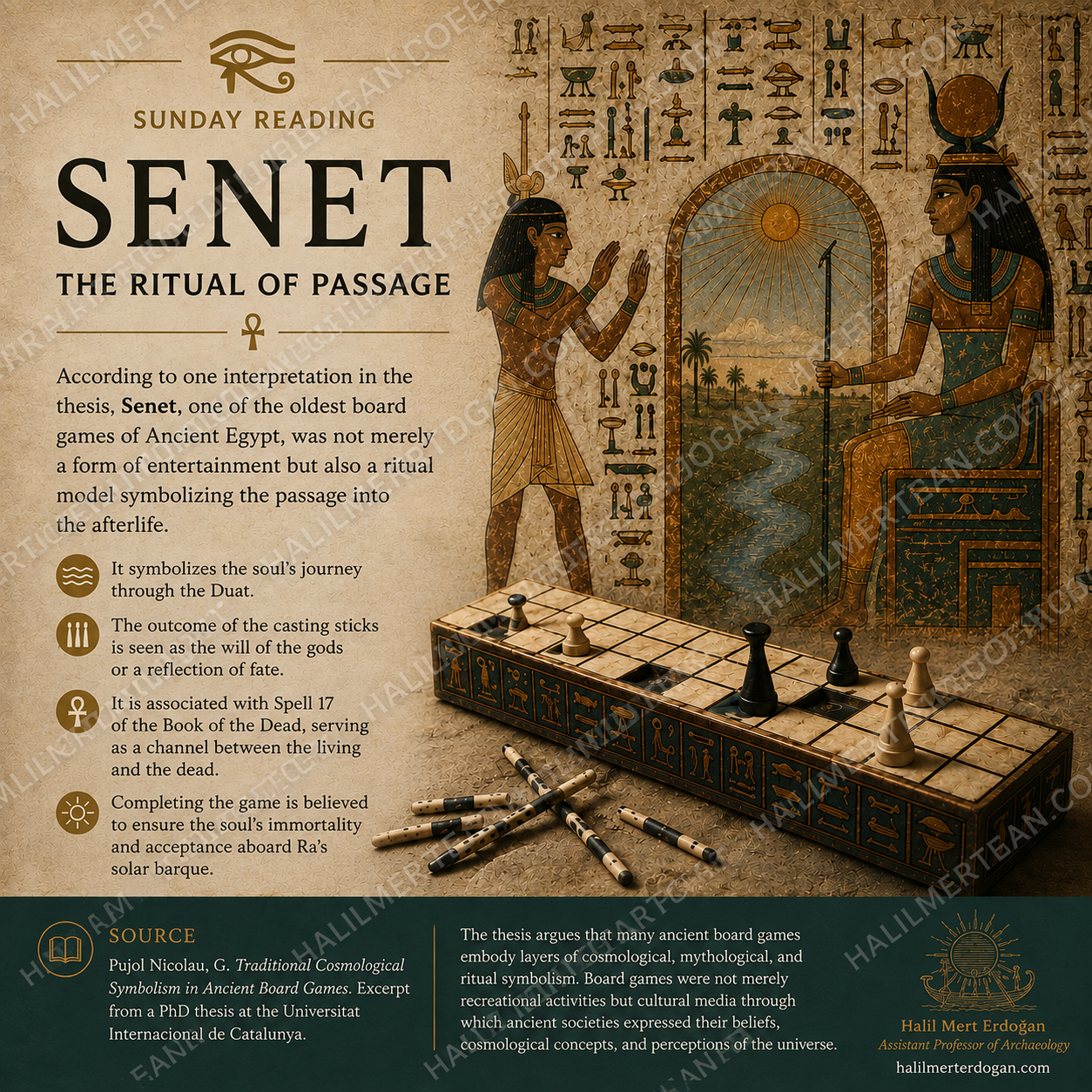
According to one of the interpretations presented in the thesis, Senet, one of the oldest board games of ancient Egypt, should be understood not merely as a game of entertainment, but also as a ritual model symbolizing the passage to the afterlife.
Literally meaning “passing” or “going forth,” Senet symbolically reenacts the deceased's journey through the Duat. The squares of the game board represent the successive stages that the soul must traverse, while the outcome of the casting sticks (or other randomizing devices) is interpreted as an expression of divine will or fate. The thesis also draws attention to the relationship between Senet and Spell 17 of the Egyptian Book of the Dead, arguing that the game functioned as a symbolic medium of communication between the worlds of the living and the dead. Successfully completing the game was regarded as a favourable omen, signifying the soul's attainment of immortality and its acceptance aboard the solar barque of Ra.
The thesis, however, extends well beyond Senet alone. It argues that many ancient board games embodied layers of cosmological, mythological, and ritual symbolism. From this perspective, board games were not merely forms of recreation, but cultural media through which ancient societies articulated their religious beliefs, cosmological concepts, and perceptions of the universe.
I thoroughly enjoyed reading this study and would highly recommend it to anyone interested in ancient board games, archaeology, and the symbolic dimensions of ancient cultures.
Reference
Pujol Nicolau, G. Traditional Cosmological Symbolism in Ancient Board Games. Excerpt from a PhD thesis at the Universitat Internacional de Catalunya.